Why did the Fed keep rates unchanged despite higher inflation?
Thanks for your question on the Federal Reserve's latest decision amid higher inflation. The Fed is facing competing economic pressures that require careful balancing, especially as it changes how it communicates with the public, which can affect many aspects of investing and financial planning.
Here are some key factors that help explain the Fed's current stance:
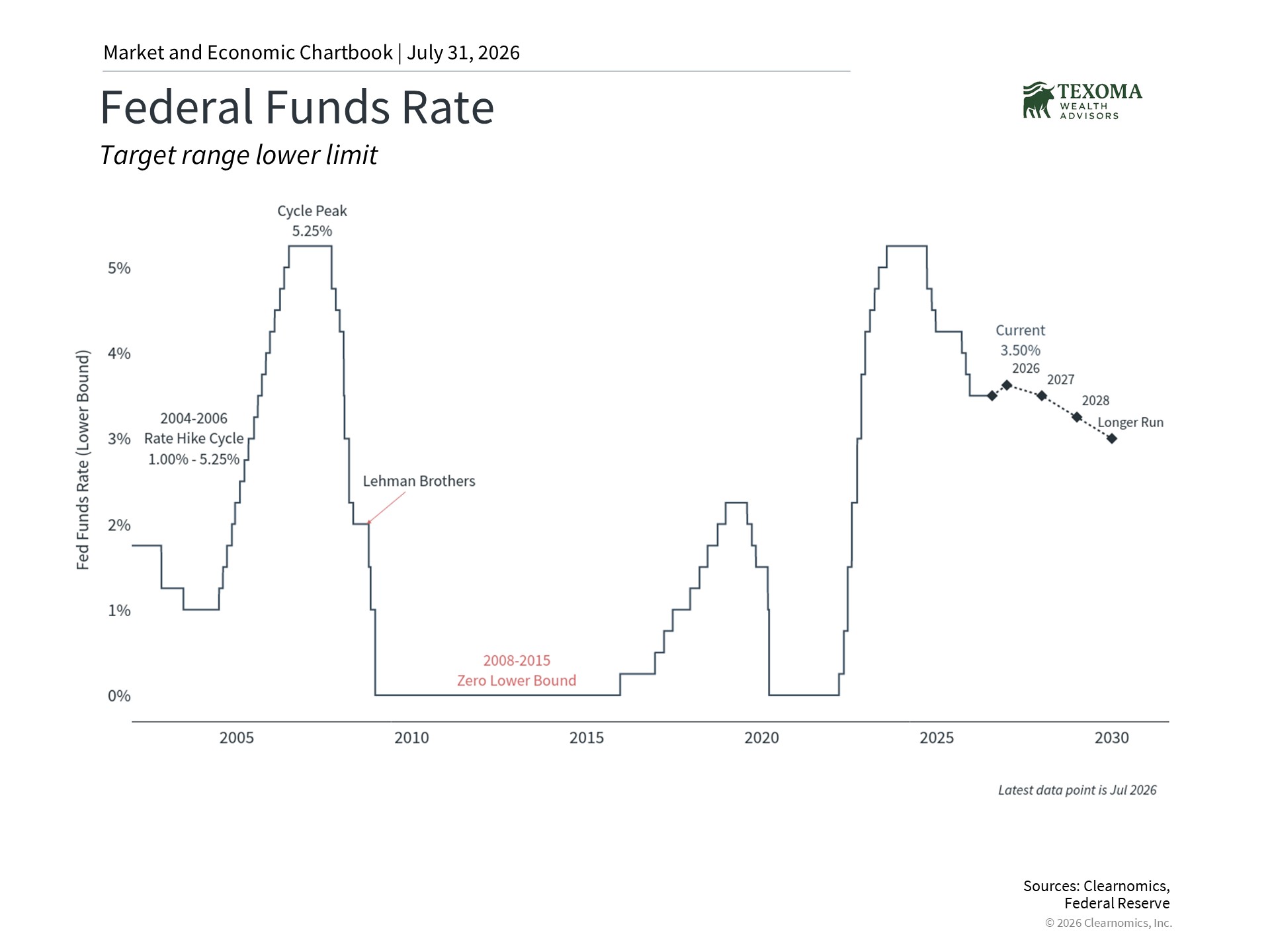
• The Fed decided to keep rates unchanged within a range of 3.5 to 3.75% at its July meeting. Its official statement was virtually unchanged from the previous decision. This is in line with market-based probabilities prior to the meeting, although the market now believes the Fed could hike rates in September or by October.
• Under Kevin Warsh, the Fed has simplified its communications to the public. Warsh believes that "forward guidance," or explaining what the Fed is thinking and how it might react to different events, isn't helpful to the public. This means that investors have fewer hints about how the Fed might react if inflation does remain elevated. However, three officials dissented with the decision, meaning they preferred to raise rates. This disagreement provides a hint as to what the Fed may debate in future meetings.
• The Fed is also balancing different economic concerns, including an uncertain labor market which only added 57,000 new jobs in June. Inflation remains higher than the Fed would like due to energy prices and AI investments which monetary policy cannot directly control. This is a tricky situation, especially because Warsh has also communicated that the Fed will not tolerate inflation. Markets have already adjusted even if the Fed has not moved on rates, with both nominal and real interest rates at their highest level in years.
• Fortunately, despite higher oil and gas prices, the latest inflation numbers still suggest that price pressures have not truly spread across other categories yet. Core inflation rose 2.6% year-over-year and "supercore" inflation, which excludes food, energy, and shelter, rose only 2.1% year-over-year in June. This buys the Fed some time before it is forced to act.
These policy decisions have led to short-term market swings. Technology stocks have experienced volatility recently, and bond markets have also faced headwinds as interest rates have risen. The attached chart shows the steady level of the federal funds rate, and the projections the Fed made at its previous June meeting.
Ultimately, navigating periods of policy uncertainty and elevated rates requires maintaining a long-term perspective on your financial goals rather than reacting to short-term market movements or Fed communications.